
Pune city is growing at an alarming rate. With the explosion in population there comes a need to provide citizens with various amenities and facilities parks and green spaces being crucial. URDPFI stipulates that each citizen needs 10 to 12 square meters of open spaces and green spaces having fauna and bio-diversity to absorb pollution to protect respiratory health levels in cities.
As a part of our initiative to help make healthier and happier cities, CDSA has started the “Pocket Parks”. This initiative to create livability in the various nooks and crannies of the city. Through the Pocket Parks project, CDSA will develop mini and nano parks at sites identified by citizens. CDSA is completing 50 years in August 2026 and the pocket parks initiative aims to create 50 small and mini parks by August 2027.
Pocket Parks interns are expected to be part of the site selection team, help in measured drawing and design of the parks. Help in documentation of each project, this includes photography, writing articles and making videos, posting to social media etc. Interns are also expected to be part of the construction and implementation team where they will help actually make the pocket park.
Design solutions
The Pune Pocket Park project involves integrating nature-based solutions and water-sensitive design to address specific climate challenges like intense monsoons and heat.
- Tree Selection for Shade & Cooling: Prioritize native species like Neem, Amaltas, and Gulmohar. These offer deep canopies for shade and are more resilient than non-native decorative trees.
- Monsoon Management: Incorporate Sustainable Urban Drainage Systems (SUDS) such as bioswales and rain gardens to manage heavy rainfall, prevent local flooding, and ensure effective water percolation.
- Cultural Gathering Spaces: Designate a central ‘Chowk’ area with stone benches under large trees to encourage spontaneous community meetings and social interaction.
- Water Conservation: Implement visible water harvesting systems and underground cisterns to store monsoon runoff for use during drier months.
- Biodiversity: Use layered, native planting strategies, similar to those at Dakshana Valley, to support local urban biodiversity and pollinators.
Suggested pocket park uses
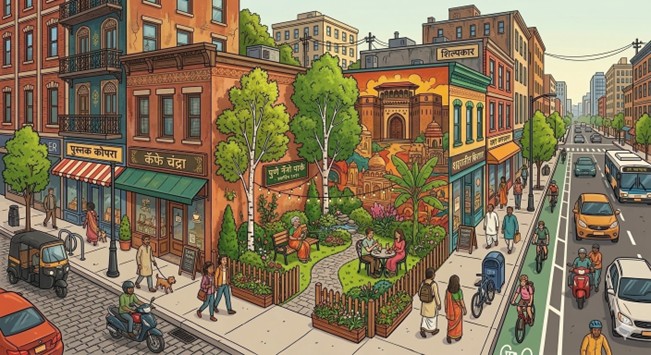
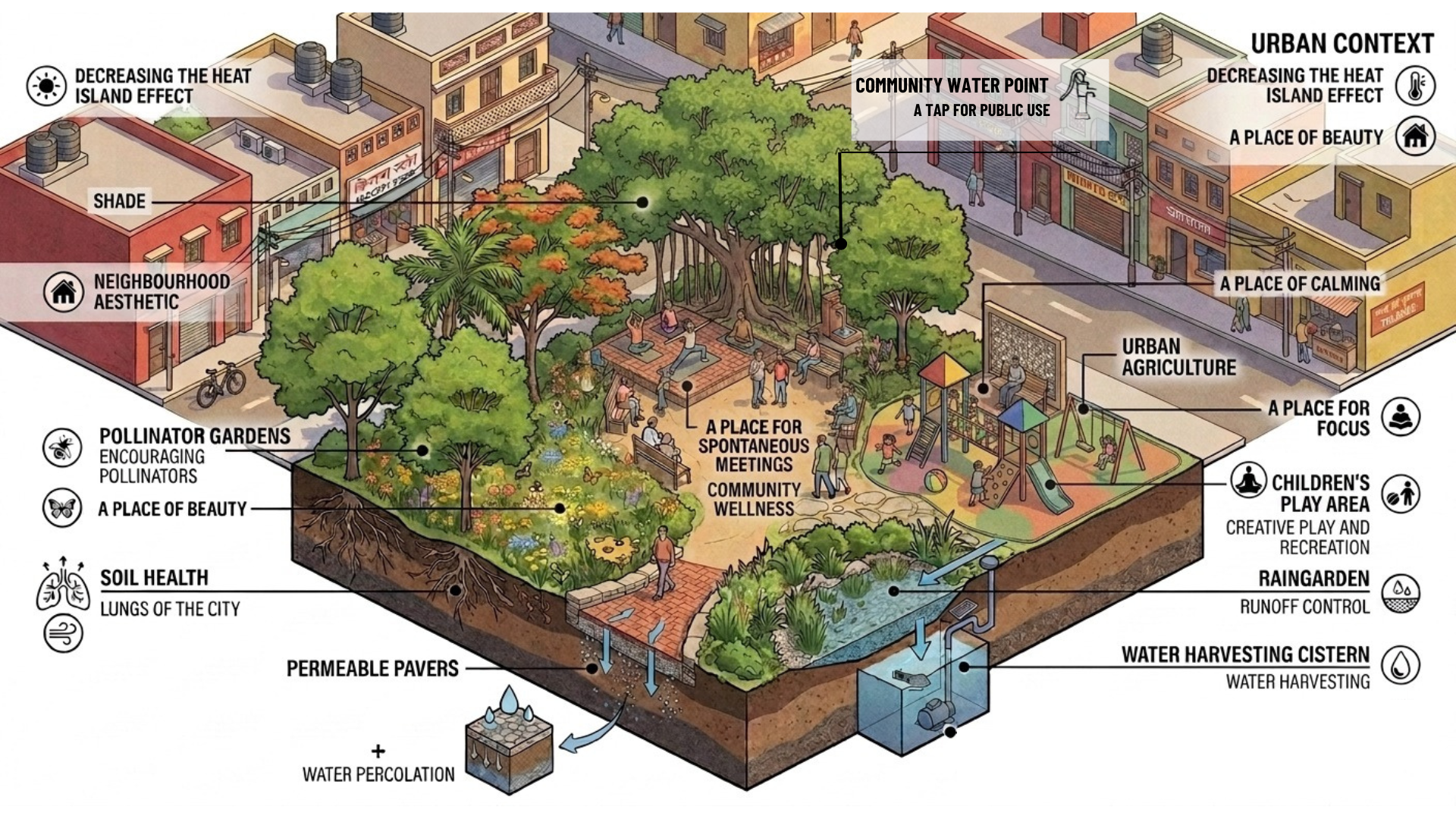
Integrating spaces for yoga and play enhances the park’s multi-generational appeal, making it a true community hub.
- Yoga & Wellness: A circular, elevated wooden or stone yoga deck provides a dedicated, flat surface for practice, ideally situated in a quieter corner like the “Place for Calming”.
- Natural Play: A “natural play” approach uses elements like stepper logs, small boulders, and timber climbing structures that double as informal seating, blending seamlessly with the neighborhood aesthetic. There is potential to also include chess boards and space for citizens to play board games.
- Shaded Recreation: Strategic placement of trees like Amaltas or Gulmohar ensures these active zones remain usable even during the heat of the day.