Traditionally, cities evolved through the ease of walking around the neighborhood to carry out day to day activities. With the invention of motorized vehicles, the focal point of urban planning and management has shifted to car-oriented planning. However, Jane Jacobs, through her classic work The Death and Life of Great American Cities (1961), brought the advantages of walkable neighborhoods to the forefront. For large Indian cities such as Pune and Mumbai traffic congestion is a constant issue that needs to be dealt with. Keeping this increase in vehicular traffic in mind, citizens are feeling really unsafe to walk around the neighborhood with a variety of obstacles like electricity transformers, parked vehicles, hawkers and broken surface of footpaths. The number of pedestrians’ loss of life in 2018 across India is 22,656 which is 15% of total fatalities.
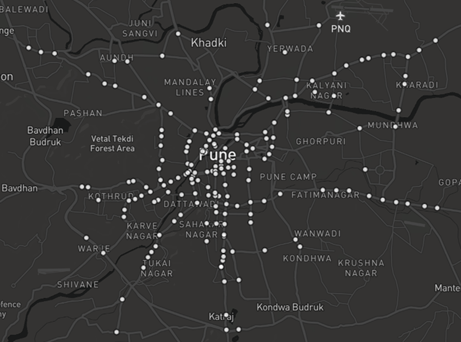
In 2020, CDSA conducted a study about the safety of road crossings at junctions which helped to bring this into the QCM ecosystem as a valuable component of walkability index. Now we are looking forward to conducting a second iteration of the same study to analyse if there’s any marginal change in the condition of the pedestrian safety at road crossings in Pune city.